
River Lots
By the Water
Traditional Métis farms in the prairies were long, narrow pieces of land that reached the river. These river lots gave every family access to water, wood, and space for farming. Instead of square sections (Dominion Land Survey) like other settlers used, the long strips made sure everyone could share the river and its resources.
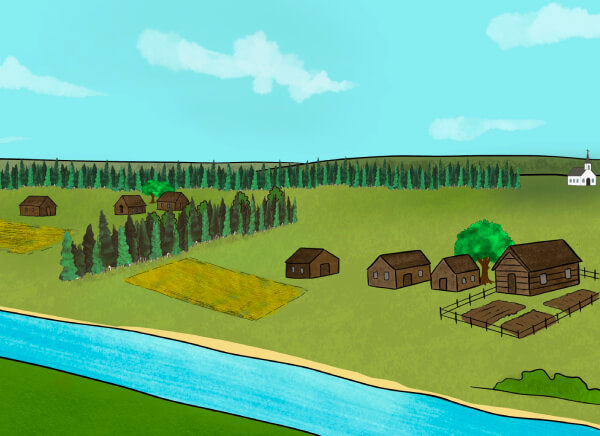
River Lots gave access to natural resources which made them valuable land
Lifeline
The river was a lifeline. It provided fresh water, fish, and a way to travel by canoe or boat. Wooded areas gave building materials for houses, barns, fences, and carts and also provided logs to burn in their stoves. Families also had hayfields, cropland, and gardens for food and animal feed.
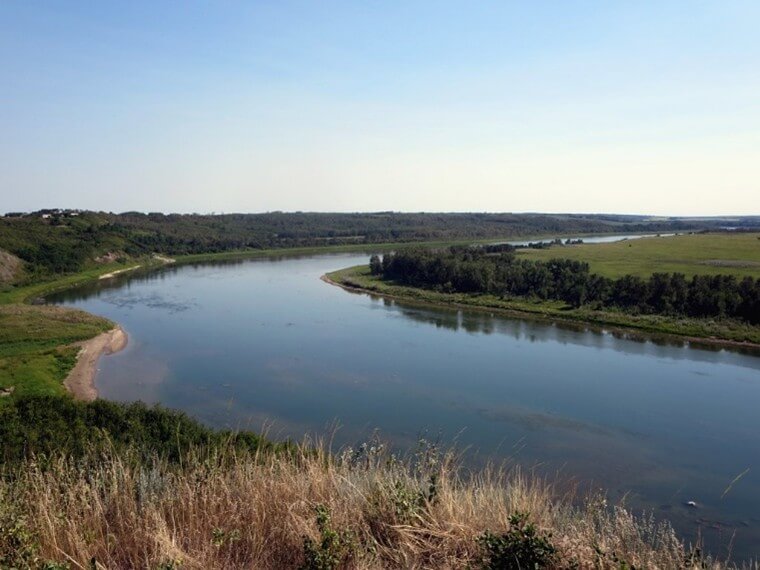
The South Saskatchewan River

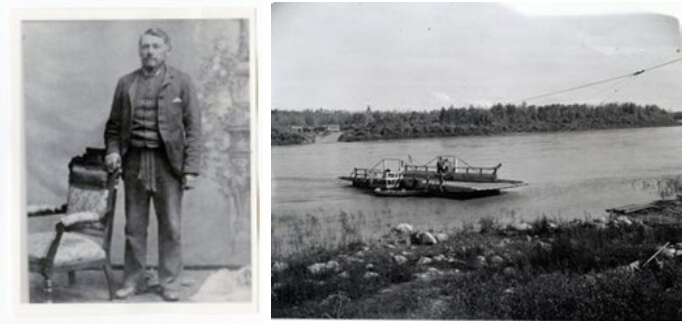
Xavier Letendre created a ferry service on the South Saskatchewan River that was used by the Métis families living on the river lots to get to the village of Batoche.
A Métis Design
River lots reflected the unique Métis way of life, they valued living close to family, working together, and travelling by water. Unlike square-lot farms, river lots followed the curves of the river and fit perfectly with Métis culture and needs.
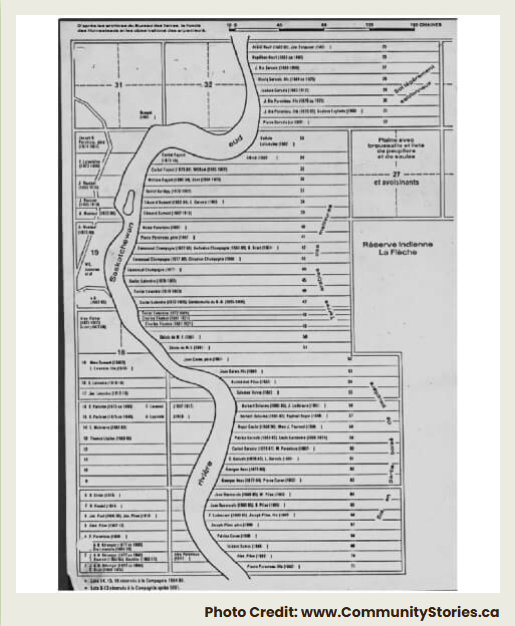
Map of River Lots along the South Saskatchewan River at Batoche from 1880-1899
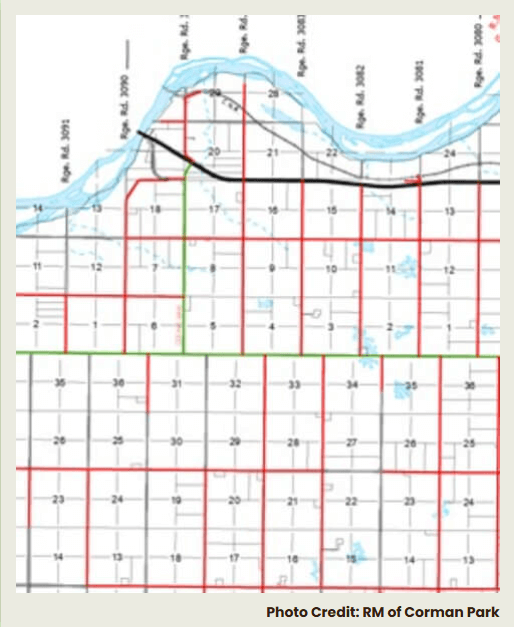
A current example of square-lot or Dominion land survey map
Neighbours
Because river lots were side by side, neighbours lived close together. This made it easy to help each other, share tools, and celebrate, creating strong and friendly communities along the riverbank.