
Gardens and Food
Food
Eating and preparing food is a time for Métis families and communities to come together and enjoy large meals. Food is considered medicine and recipes would be passed down through generations.
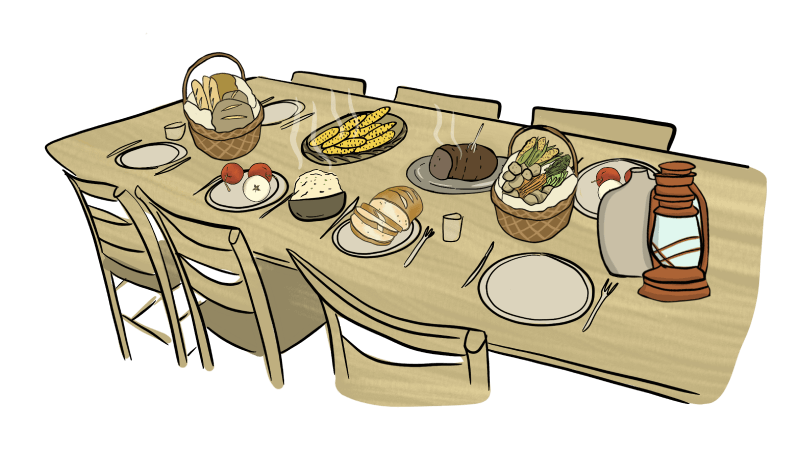
Neighbours would come over to share a meal
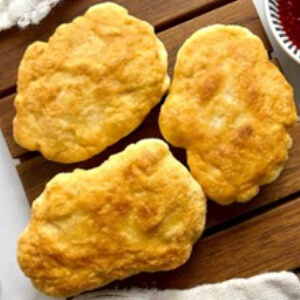
- 3 cups flour
- 2 Tbsp baking powder
- 1 tsp salt
- ½ cup shortening (margarine, butter, lard)
- 1 cup water
Mix ingredients in a bowl and mix well. Then roll into a ball and cover for 10 minutes then fry the bread mixture in a pan, over an open fire, or bake in the oven until golden brown.
Métis diets consisted of food that could be foraged, hunted, or grown. Some traditional Métis dishes include galette (baked bannock), pemmican, Rubaboo (stew), boulettes (aka bullets) meatballs, la pouchin (pudding) and a variety of different berry dishes.
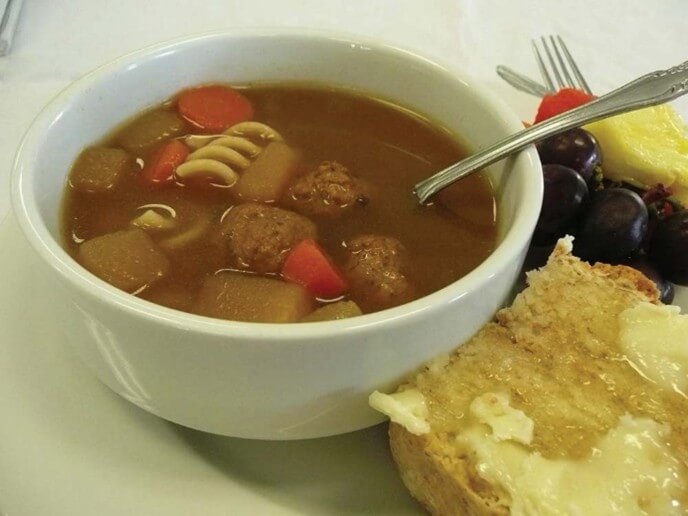
Boulette soup
Gardens
Gardening provided Métis families with fresh vegetables such as potatoes, onions, cabbage, carrots, and turnips. They also had a wide knowledge of plants that could be used for medicine. Gardens supplemented the traditional Métis diets of wild game, fish, and berries. Planting and harvesting gardens happened in certain seasons, so they did not get in the way of the buffalo hunt.
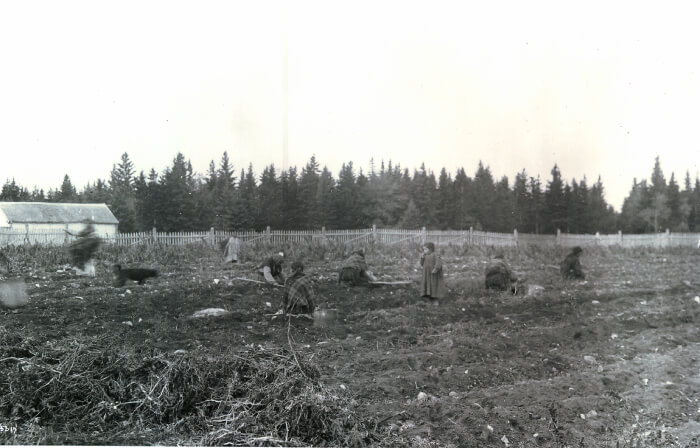
Women harvesting a garden of potatoes in Cumberland, SK
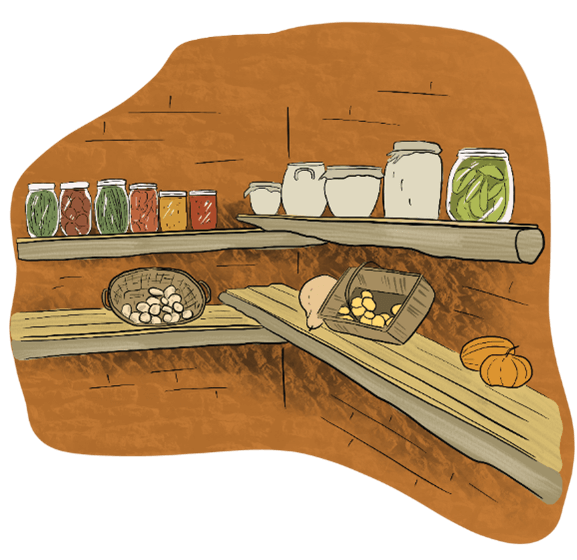
Canned or preserved foods were stored in a cold room to keep for the winter months