Select Page

Scrip and Métis Farms

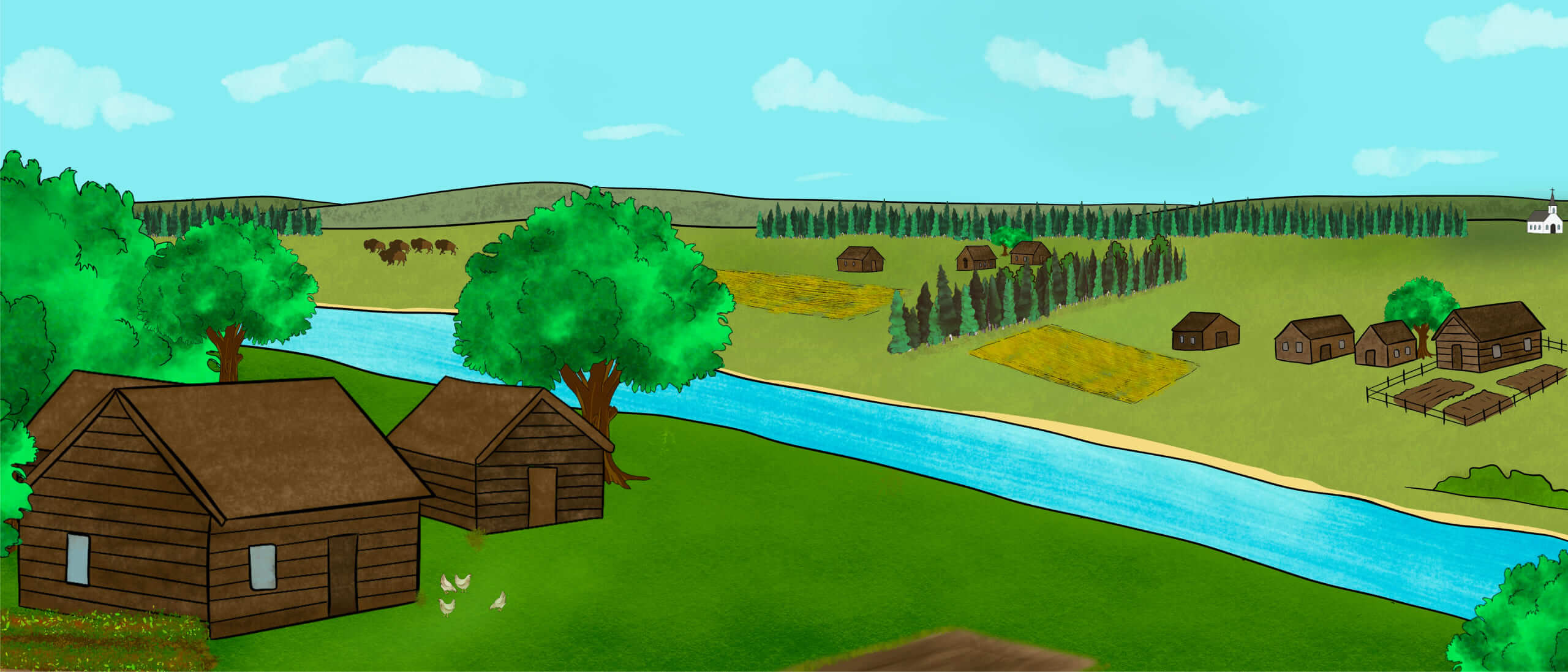
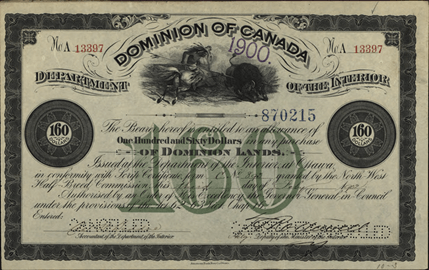
In the late 1800s, the Canadian government  issued scrip to the Métis/Michif. Scrip was a Canadian government system of land/money certificates given to Métis people to get rid of their Indigenous land title.

Many Métis did not understand how this piece of paper could replace the land they lived on. It was a different world view as most Indigenous nations believed that you do not own the land and the colonial government’s understanding was that you could own the land.
A piece of art by Leah Marie Dorion made with mosaics shows two Indigenous people standing near animals, sun, and water.

Photo Credit: Library and Archives Canada

An example of cash scrip
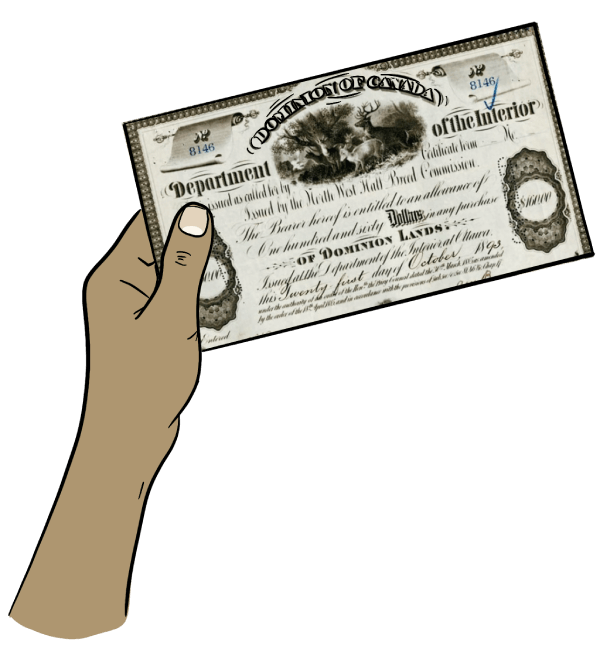
Scrip was a piece of paper that could be traded for money or land somewhere else. Many Métis people could not read and were not familiar with making a deal with paper, this led to many Métis people getting pressured or tricked into selling their scrip for very little in return. This meant they lost their river lots and farms, breaking up their communities and making it hard to keep their way of life.
A piece of art by Leah Marie Dorion made with mosaics shows two Indigenous people standing near animals, sun, and water.
Losing their land meant losing access to the river, rich soil, and the close-knit community that came with living side by side. Without their river lots, many Métis families had to move, travel farther for work, or change how they lived.
A piece of art by Leah Marie Dorion made with mosaics shows two Indigenous people standing near animals, sun, and water.
The Métis farmers and their families who kept their scrip had to move to a new location and if they wanted to continue farming, they had to start from scratch. Many Métis who did start a new homestead eventually lost their land when they couldn’t pay their taxes. The land they were “allowed” to live on was not good for growing cereal crops which made it hard to make money.
A piece of art by Leah Marie Dorion made with mosaics shows two Indigenous people standing near animals, sun, and water.

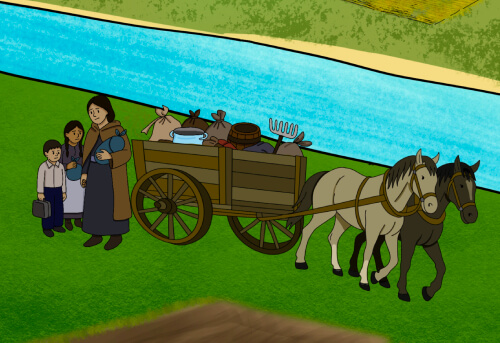
Families were forced to pack up and leave their home

Working for Settlers

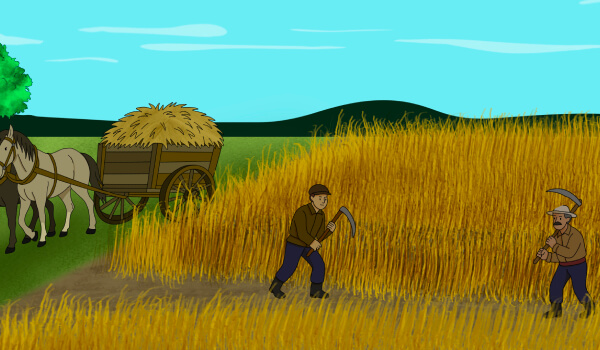
The Métis who got displaced after 1885 and settled on road allowances were the work force behind many settler farming operations. They did all the physical labour like plowing, picking rocks, threshing, etc. and got paid very poorly or were given small rations of food for their hard work.
A piece of art by Leah Marie Dorion made with mosaics shows two Indigenous people standing near animals, sun, and water.

Check Your Understanding